DHANUSHKODI (Dhanush: Bow and Kodi: End)
Much is written about this little frail town at the southernmost tip of our subcontinent, India. I had the most blessed opportunity to visit this tucked-away land out of a “fairy tale” story. The feeling was that of an etched memory brought through the many readings that I had done before setting off on this travel. There was a perceived anticipation and a terrible bubble in the stomach… a churn, like I was going to see or be in a place that was not real.
Come be with me on this very special and personal account of Dhanushkodi…. Let’s traverse in her silence. For me, she is beautiful to the par of infinity. Her character is so deep, and her stories of ravages still linger as voices in the air.
Railways; a fascination for me from my childhood days, is still my choice of travel, by all means. I love the trains and the verve, the life outside and everything that is part of the experience… and if a place has had a story of a railway line that once was used for boat-mail (a combined train and steamer ferry service between India and Ceylon (Now Sri Lanka), operational in the 1900s), then the “intrigue personified”!
Dhanushkodi and Rameshwaram are a writer’s paradise, with layers of story, from fiction to facts, an archaeological wonder, of mythological stories (no, they are for real, it is the belief…..), of surreal beauty, the sun, sand, salt everywhere and unending waters: your company the silence and the gushing of waves. A tern here and there, the gulls fluttering their wings to take the plunge to get their catch of fish.
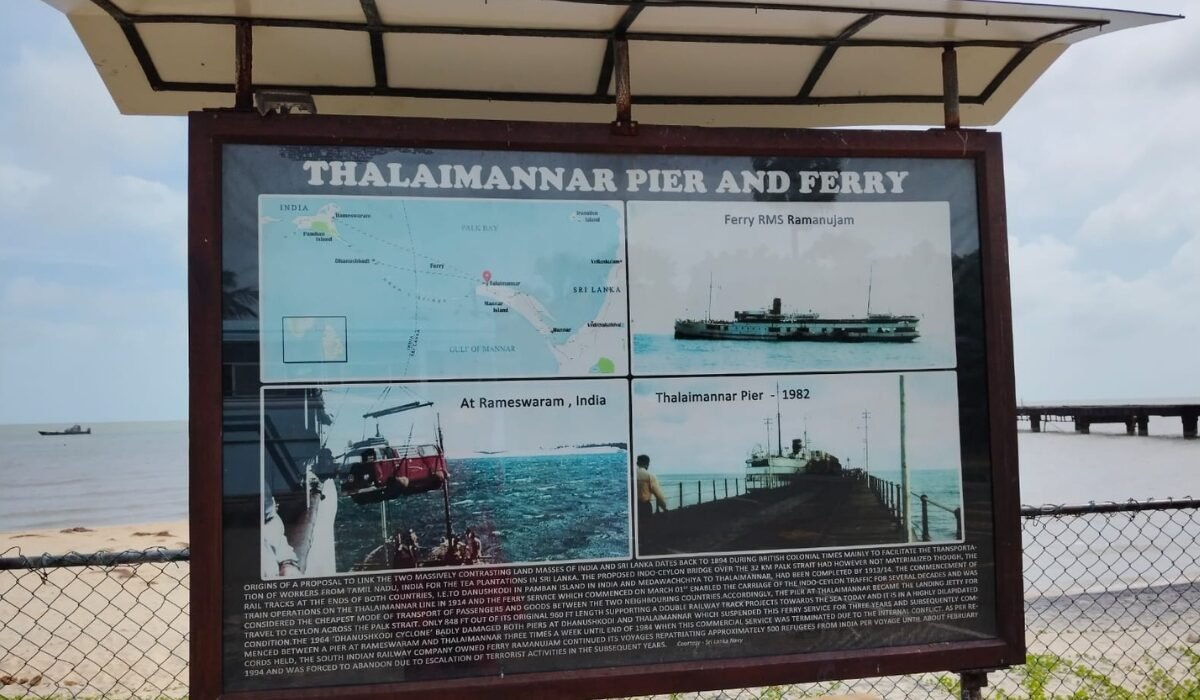
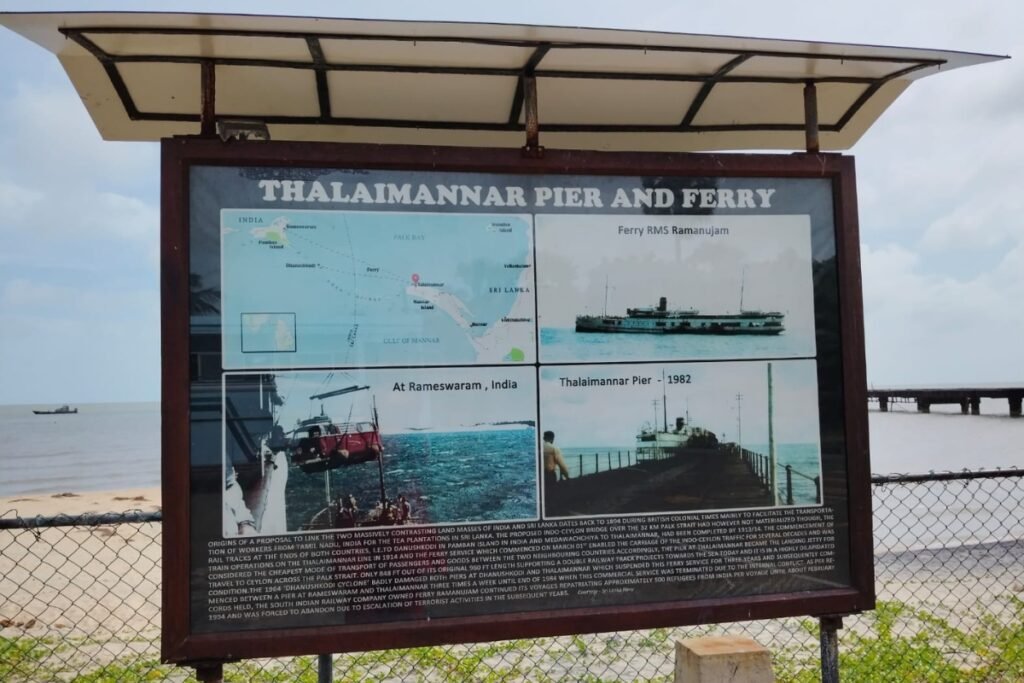
Our immediate neighbours Sri Lanka just 31 km away, had complete access to this coastal town. Constant traffic of people used ferry services between Dhanushkodi and Talaimannar of Srilanka, to hop in and off. Travelers, pilgrims, and goods too got transferred using this mode. It is written and spoken that there were hotels, textile shops, and Dharamshala catering to these pilgrims and travelers. There was a railway station, a small hospital run by the railways, a post office, and government offices.
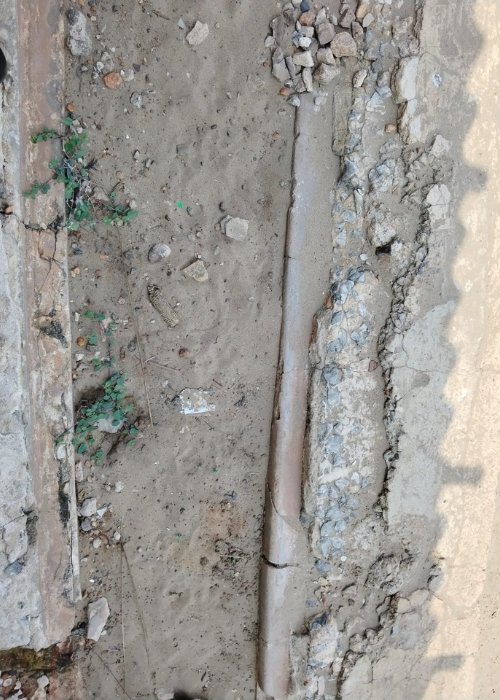
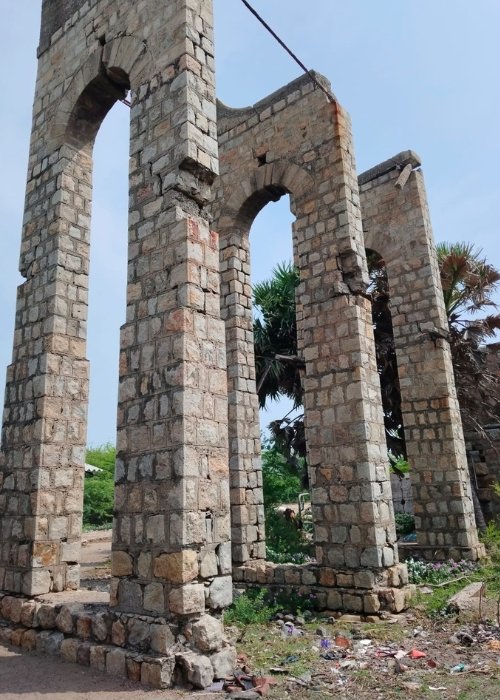
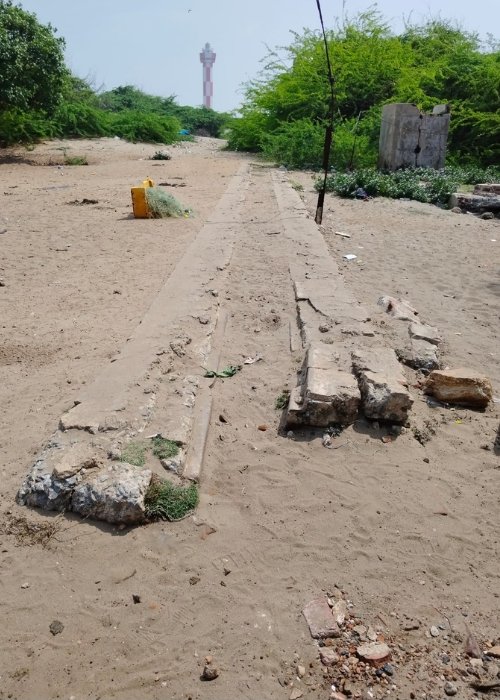
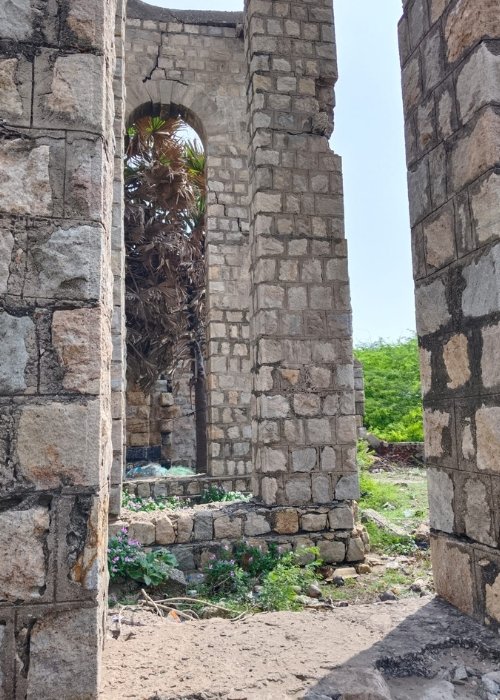
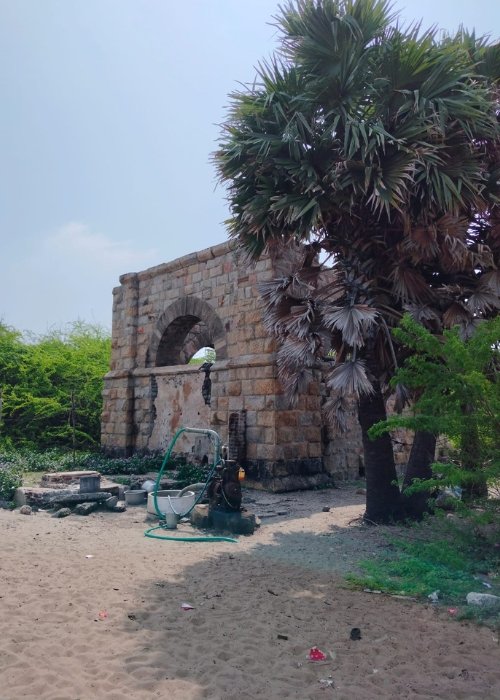
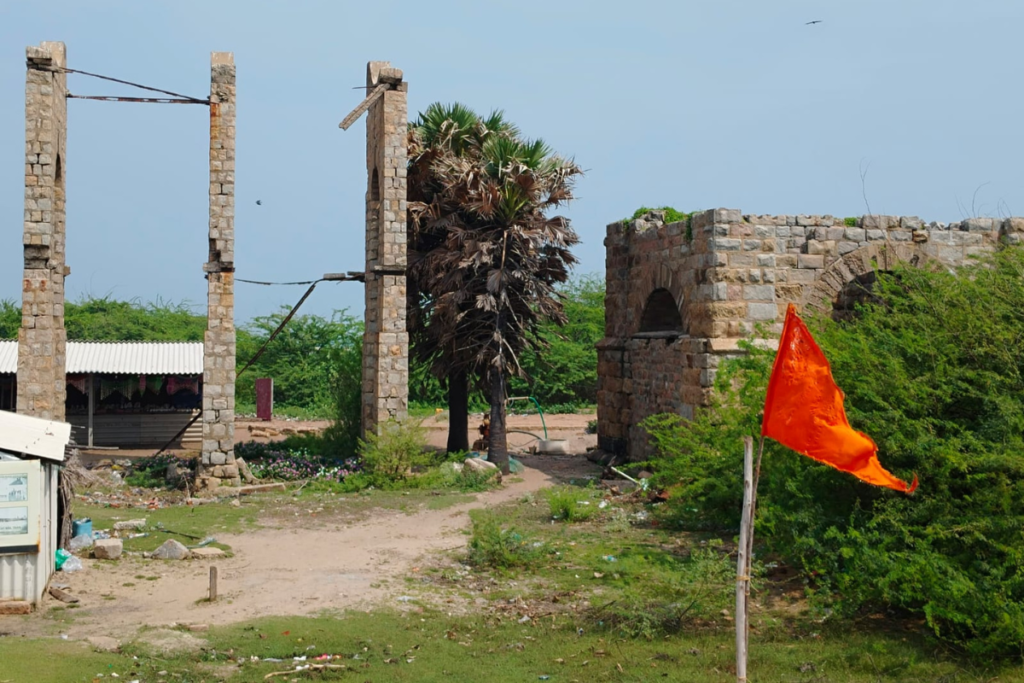
True, the cyclone took away everything thing living; and some of the dilapidated structures stand testimony to the test of time, which gives one an eerie feeling of the past; but then the beautiful road, surrounded by the sea, takes you to the end from where the phenomenal story of Ramayan unwinds. Rama when he wished to invade Srilanka to rescue his consort Sita, who had been abducted by Ravana, the Demon King of Lanka, crossed the Pamban Pass from Mandapam on the mainland to the large Island on the Indian side and got as far as Dhanushkodi only to find his further progress barren, so the story goes- a causeway known as Adam’s Bridge came into being and Rama crossed the sea by this on to Mannar Island and thence to Srilanka, where he freed his queen from imprisonment (“ Indian Railways- glorious 150 years”, RR Bhandari) and the story of Lord Ram and the army led by Hanuman and others on their way to Lanka.
Standing at the edge and imagining this story, gives you a feel of the past and you really sense the present of how you are just a spot in nature and its parables.
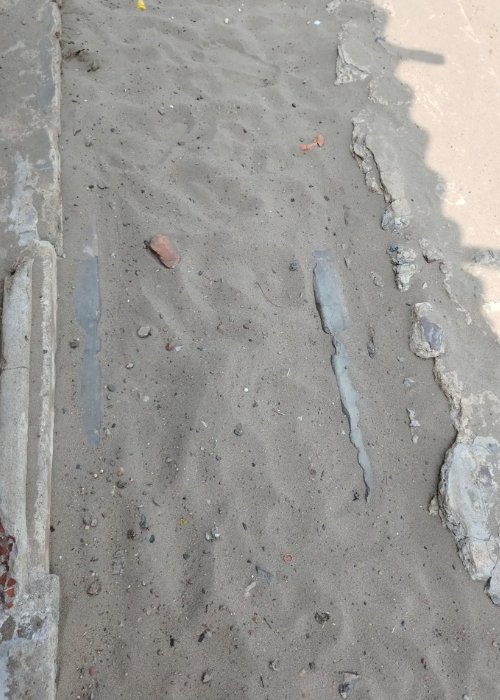
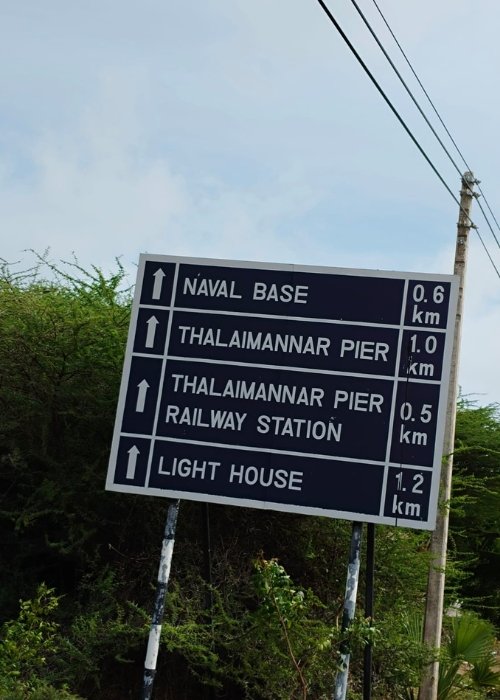
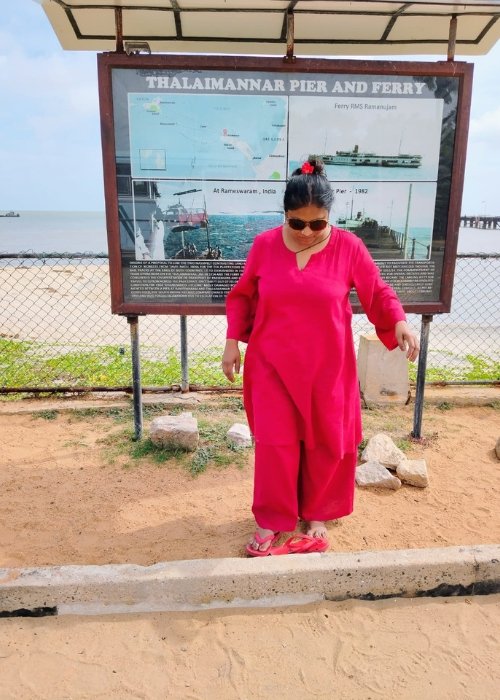
The actual Railway and ferry line was envisaged by Sir Henry Kimber, in 1907, the then chairman of the South India Railway. On one of his inspections to India. Received and important Ceylon planters, who urged that improved means of communication should be provided. On Sir Hendry’s return to London, he secured interviews with Lord Morley, the Secretary of State for India, and Lord Elgin, the Colonial Secretary. As a result of these efforts, The Ceylon government agreed to construct a railway, of standard 5ft, 6 in, gauge, from Madavachi on its main line to Talaimannar, a distance of 67 miles (“ Indian Railways- glorious 150 years”, RR Bhandari). I visited Talaimannar only to stand at this point and click a picture. This was my love for the railways!
The Indo-Ceylon connection was open for quite a number of years, and the Dhanushkodi station, yard, and other facilities were operative. The Ceylon Boat mail from Madras to Dhanushkodi Pier, where passengers were transhipped to a turbine ferry steamer for crossing Adam’s bridge for Talaimannar and thence to Colombo. The crossing used to take 1 hour and 30 minutes.
What really happened to this quaint little seafarers’ place? Well, this is a gory story…. On the 22nd Day of December in the year 1964…
History dates back, to times before 1964 when this place called Dhanushkodi was a flourishing tourist and pilgrimage town. The small town was literally wiped out of the face of the earth by the 1964 Rameswaram Cyclone, also known as the Dhanushkodi Cyclone, which was regarded as one of the most powerful storms to ever strike the Indian continent.
In my readings, I understood from the writings of Ar. Rajshekhar Rao, that the southern part of erstwhile Dhanushkodi Township facing the Gulf of Mannar sank by almost 5 meters due to vertical tectonic movement of land parallel to the coastline. As a result of this, a patch of land of about half a km in width stretching 7 km along the North-South direction submerged in the sea along with many places of worship, residential areas, roads, etc. The Government of Madras declared the town as a Ghost town and unfit for living after the storm. People and houses got washed away. A six-coach Dhanushkodi Pamban passenger train got smashed by a giant 20-foot wave that rose from the turbulent sea. The Pamban Bridge, built by an Irish engineer, was the only link then, between Rameshwaram and the mainland that got washed away. All this happened on the count of seconds and minutes.
In an article, written by Padmaja Sriram (https://www.newindianexpress.com/web-only/2024/Jun/15/was-dhanushkodi-cyclone-the-start-of-climate-change-in-south-india, Updated on: 16 Jun 2024), the incidents of the Cyclone day is expressed as an emotional account.
It was especially heart wrenching to read..,
Palani woke up to the touch of chilled waters grazing his coir cot. His family lying on the floor were silently washed away….., Closed in by the house, Palani sank. The house shuddered, moved, and became buoyant.
Moving away from the devastation and to what Dhanushkodi is today, and why precisely this article is meant to convey… While on my visits to this land, and my interactions with the locals, there lives anticipation and the urge, to see Dhanush (as I fondly call it) get back to it’s old and glorious times.
There are numerous shops that have sprung up on the sides of the road leading to the “Arichal Munai” (“Erosion point“). A telescope has been fixed to see Srilanka and throngs of tourists…. The essence of Dhanush, lost to its yesteryear glorious times
This is Dhanush through my lens!